





How 1 state may upend how you use your credit card — and what you can do about it
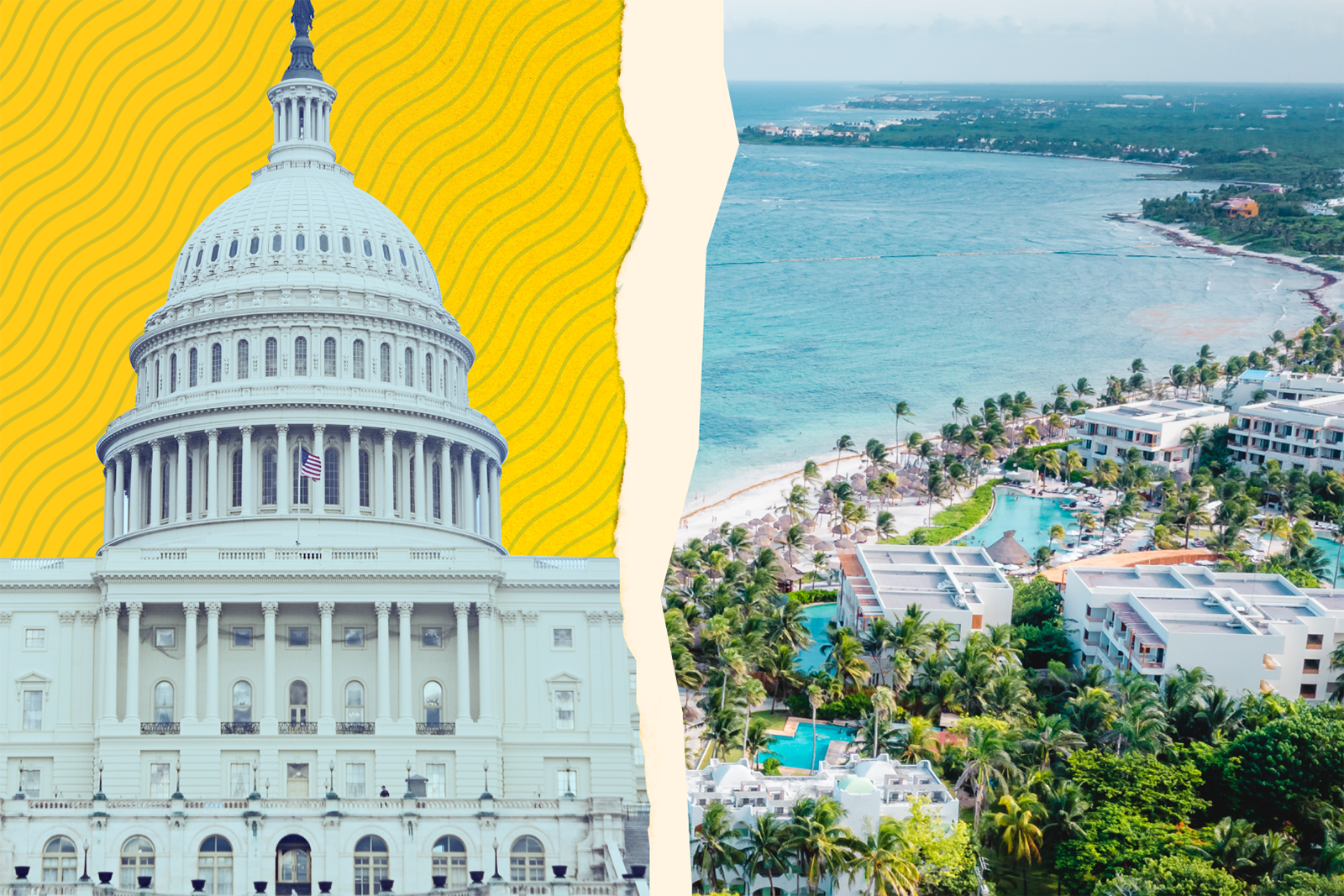
Over the last few years, the federal government has been considering bills that could upend how credit cards work and potentially jeopardize rewards — most notably, the Credit Card Competition Act (CCCA), which has failed to advance as a stand-alone bill or as an attachment to other legislation.
While federal efforts have stalled, state governments are increasingly joining the fray.
Pending the outcome of federal litigation, Illinois may soon be the poster child for what happens to consumers when such legislation takes effect.
Here’s what you need to know about how this could negatively affect the way you pay for goods and services.
Some background

First, a quick primer on the mechanics of a credit card transaction.
Every time you use a card to pay for something online or in a store, the merchant is charged a small percentage of the purchase amount — about 2% — to process that transaction. This is typically referred to as the merchant discount fee, which is shared among the card’s issuing bank (the interchange fee), the credit card payment network (most often Visa, Mastercard or American Express) and the merchant’s processing institution.
All parties use these fees to safeguard the purchase, fight fraud, cover the cost of lending, and fund rewards programs by issuing points, miles or cash back.
As a consumer, you’re protected from unauthorized charges, and you’re the one choosing the card (and network) for the purchase. Meanwhile, small businesses enjoy a nearly frictionless transaction process, with minimal risk of loss or theft — a major concern when handling cash transactions.
Unfortunately, one state is marching toward upending a major segment of this ecosystem, despite a track record of failure in other parts of the country.
Illinois law on taxes and tips
In 2024, the Illinois state legislature passed the Interchange Fee Prohibition Act, or IFPA. This is set to take effect July 1, 2026, though federal litigation is still pending. On Feb. 10, a federal judge declined to block parts of the law’s implementation and found that another part of it is preempted by federal law. Both parts of the ruling are being appealed.
The law would prohibit financial institutions from collecting or receiving interchange on sales tax and gratuities. In some cases, this could make up nearly a third of an entire transaction, such as a purchase at a restaurant in Chicago with a 10% tax rate and a 20% tip.
Unfortunately, the logistics of implementing such a proposal are incredibly complex, and the burden it would impose on small businesses could be massive.
Would merchants take on costly upgrades to new processing hardware and software in order to split up a purchase into one part that’s exempt from interchange fees and the other part that’s not exempt? Would these businesses collect interchange fees on the entire transaction and then request a refund for specific components? And with 102 counties and many more municipalities in Illinois, how will varying tax rates be tracked?
Not surprisingly, large retailers would be the biggest beneficiaries of these policies, as they have a large volume of transactions and massive accounting teams to help implement such a complex new system (and cover the costs associated with it).
In fact, a study (PDF link) conducted by the Electronic Payments Coalition found that the 40 largest retailers in Illinois would take home nearly 40% of any interchange fee savings realized with the bill. The roughly 1.3 million small businesses in the state would be left to deal with the headaches of implementation while missing out on any meaningful savings.
Even those large retailers would be unlikely to pass along those savings to customers. When debit card interchange was capped by the Durbin Amendment to the Dodd-Frank Wall Street Reform and Consumer Protection Act in 2010, only 1.2% of merchants lowered prices, according to a survey by the Federal Reserve Bank of Richmond.
The party that would feel the brunt of the new law in Illinois is the average consumer.
Impact on the consumer

Under the IFPA, what was previously a simple swipe of a credit card could turn into a multistep process, as businesses attempt to split a single transaction into two (or more) — one for the goods or services and the other(s) for taxes and gratuities, as applicable. They may even require two different payment methods.
For example, a restaurant customer may pay for food and drinks with a card and have to fork over cash (or write a check) for the tax and tip.
There are also privacy concerns with this type of legislation, since a merchant would need to share additional details about your purchases to ensure compliance with the law. If a merchant decides to itemize transactions in their system to avoid interchange fees on taxes and tips, what was previously an entirely private transaction could suddenly be shared with other parties.
And to make matters worse, awareness of this law remains quite low.
A recent poll by Morning Consult found that less than a third (31%) of Illinois residents are familiar with the upcoming changes. However, once they learn about them, opposition spikes to 61%, covering all political persuasions. Most importantly, 81% of Illinoisans say that the current electronic payment system should remain unchanged.
Over two dozen states considered similar legislation last year; none of them passed. This held true regardless of the political party in charge, as bills were rejected in blue states, red states, and purple states
Nevertheless, a number of other jurisdictions are considering similar legislation — or even measures that go much further. This includes Colorado, Georgia, Pennsylvania and the District of Columbia.
Bottom line
While efforts continue at the federal level to regulate credit card processing, new initiatives are popping up in the states. A law that would exempt taxes and tips from interchange fees is set to take effect in Illinois on July 1, creating confusion for consumers and imposing substantial burdens on small businesses.
Regardless of the locale, these regulations share some important similarities. The biggest beneficiaries are the largest retailers, and the implementation would add friction to a process that safeguards your data and allows you to earn rewards on every swipe of your credit card. The global payments system is designed to work the same for everyone, every time, everywhere. Injecting inconsistency into this universal (and convenient) process at the state level could upend the very nature of how you pay — and how you earn rewards on your purchases.
If you want to make your voice heard, you can share your thoughts on these bills with your elected representatives at the following links:
Editorial disclaimer: Opinions expressed here are the author’s alone, not those of any bank, credit card issuer, airline or hotel chain, and have not been reviewed, approved or otherwise endorsed by any of these entities.


Related Articles

Double-dip these Rakuten and Amex offers to save big on your next Viator tour
If you’re planning activities for an upcoming trip — or looking for...
Delta Platinum vs. Delta Reserve: Picking a premium card for Delta perks
Delta Air Lines offers one of the most comprehensive credit card portfolios...

Chase adds Wyndham Rewards as a new hotel partner — should you transfer your points?
Chase Ultimate Rewards has added Wyndham Rewards as a new transfer partner,...


Visiting the UK? Take note of these new travel rules
From February 25, nationals from 85 countries must have an ETA to...
Leave a comment