




Hands-on: The RayNeo Air 4 Pro smart glasses are like wearing an OLED TV on my face
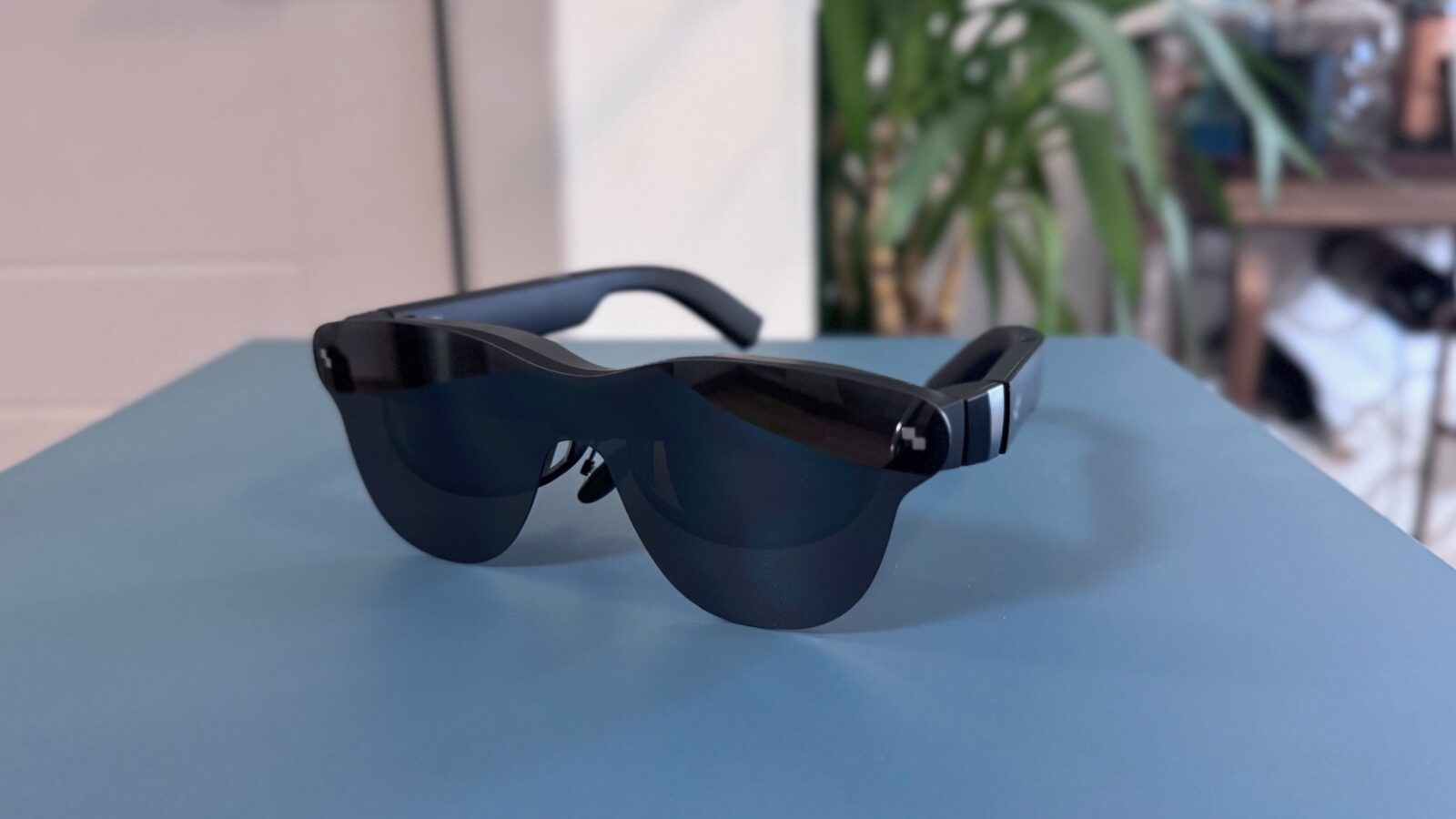

I got to try a ton of awesome smart glasses at CES 2026, and one of the most exciting pairs is finally available. On Friday, TCL launched the new RayNeo Air 4 Pro AR/XR glasses for $299 (early shoppers can save $50 at launch), which boast dual Micro-OLED displays for watching movies and playing games.
These smart glasses are the world’s first to offer support for HDR10, and they can create a virtual screen up to 201 inches in size. They’re also noticeably brighter and more vivid than other smart glasses I’ve tried, including the popular Xreal One Pro AR glasses, which I’ve tested and enjoyed. The Xreal One Pro glasses cost $650, and the cheapest competitors have a starting price of $499. As I wrote at the time, with a boundary-breaking display and a $299 price tag, the RayNeo Air 4 Pro seemed all set to completely disrupt this emerging market.

But there’s a reason we don’t write reviews after a short demo at CES. After spending more time with the RayNeo Air 4 Pro, they’re not quite as big a threat to Xreal as I first thought.
Still, it’s hard to argue with $299 smart glasses that feature a gorgeous micro-OLED display. For gaming and watching movies, the RayNeo Air 4 Pro are currently the best smart glasses on the market.
What are the RayNeo Air 4 Pro AR Glasses?

Credit: Timothy Werth / Mashable
The Air 4 Pro are augmented reality glasses that connect to a smartphone, laptop, gaming handheld, or other device. Simply plug them into any compatible device, and they should start to work immediately — no setup required. You do have to stay connected at all times via the included USB-C cable, but you don’t have to worry about battery life, which is nice.
Using dual micro-OLED displays, smart glasses like this create a virtual screen that floats in the space in front of you. If you’re plugged into a laptop, it will act as a second monitor. On a smartphone, it mirrors your display. While spatial computing gadgets like this are often designed for enhanced productivity, the RayNeo Air 4 Pro were specifically designed for entertainment.

Credit: Timothy Werth / Mashable
As TCL puts it in a press release, “RayNeo Air 4 Pro is like a television you can wear on your head…With Air 4 Pro, you can enjoy an IMAX-level private cinema in a crowded subway, a large-screen working environment during business trips, or an immersive gaming experience during breaks — this is the revolutionary experience brought by RayNeo Air 4 Pro.”
The OLED displays support HDR10 and have two refresh rate options, 60 Hz or 120 Hz.
The RayNeo Air 4 Pro AR/XR glasses: By the numbers

Credit: Timothy Werth / Mashable
Let’s break down the specs before diving deeper into my full RayNeo Air 4 Pro review.
-
Style: Augmented reality smart glasses
-
Display: 0.6-inch micro-OLED display
-
Screen size: 201 inches
-
Brightness: Up to 1,200 nits
-
Resolution: 1920×1080
-
Refresh rate: 60 Hz, 120 Hz
-
Color accuracy: ΔE
-
Sound: Bang & Olufsen surround sound (4 speakers)
-
Weight: 76 grams
In terms of fit and comfort, they’re slightly lighter than Viture and Xreal glasses (though they’re much heavier than display glasses like Even Realities G2). I haven’t had any problems with comfort, though, because of my larger face size, the fit is a bit awkward. I have to fiddle to keep the whole virtual screen in sight.
The best smart glasses for entertainment

Credit: Timothy Werth / Mashable
I’ve spent quite a bit of time testing the Xreal One Pro smart glasses, widely regarded to be the best AR glasses on the market right now. However, in my experience, the One Pro are most useful when working on the go, such as at a coffee shop or airplane, when you need an extra display. But with the new RayNeo AR/XR glasses, TCL is prioritizing an advanced display and audio.
The sound is high quality for smart glasses, though obviously they compare poorly to the best wireless earbuds. I found they have minimal (but not non-existent) sound leakage. When watching movies, TV shows, and YouTube videos, I was happy with the sound. I did experience some technical issues, however. When connected to my MacBook, I could not get the RayNeo Air 4 Pro to play audio instead of the MacBook speakers. That could be an Apple problem, of course.
The display is still impressive. If you’ve tried other AR glasses, you should notice an immediate difference. Color accuracy, motion blur, sharpness, and brightness are noticeably better here, particularly brightness. While the new Xreal 1S AR glasses max out at 700 nits, the RayNeo offer 1,200 nits. They also provide built-in eye protection (3840Hz PWM dimming) so your eyes don’t tire out.

Credit: Timothy Werth / Mashable
However, it’s not all rosy. I noticed a regular flicker effect when using the glasses, which was distracting. It wasn’t so bad to render the glasses unusable, but it was a big pain point. I also found it difficult to get the entire display in my field of view, likely because I have a much larger head than the average person. You can adjust the angle of the lens to the frames and change out the nose guard, but sometimes the bottom of the screen would blur or disappear.
On the whole, you get a 201-inch virtual screen you can use to watch movies while traveling, lying in bed, or anytime you don’t have access to a TV. It really is like having an OLED TV you can wear on your head.
Of course, that’s also the $299 question: Do you want to wear an OLED TV on your face?
A beautiful display, but at a cost

Credit: Timothy Werth / Mashable
It wasn’t apparent in my initial demo, but the new RayNeo glasses are missing some very important features. With my Xreal glasses, I can easily adjust the size of the virtual screen, the angle of the virtual screen, and the distance. I can also activate a curved, ultra-wide display mode. Most importantly, I can anchor the display so that it freezes in a particular part of my eyeline, no matter how much I turn my head.
This spatial computing trick is especially handy when working, as I can anchor the screen just above or to the side of my laptop. RayNeo’s virtual display moves with you. You may also be distracted by some reflection on the back of the glasses, which hasn’t been a problem with Xreal to date.
In its press materials and on its website, TCL also talks about an immersive 3D feature, which can turn 2D photos and videos into 3D. This doesn’t appear to be available yet, however.
Xreal’s 3D conversion feature is live, and it’s pretty damn cool.
Are the TCL RayNeo Air 4 Pro worth it?

Credit: Timothy Werth / Mashable
For early adopters eager to try AR glasses for entertainment, I think this is the best option on the market in 2026, at least, for now. But as I already discussed, they come with tradeoffs, and Xreal has a large advantage for productivity and advanced features like 3D conversion. (If money is no object, wait for the ROG Xreal R1 Gaming Glasses coming later this year.)
I should also note that smart glasses are a very new product category. The average customer is an early adopter and a techie who’s OK with some bugs and quirks if it means they’re on the cutting edge. I think it’s an open question whether the market will ultimately settle on AR headsets like the Vision Pro and Galaxy XR, or on AR smart glasses (like the ones Google is releasing later this year, and that Apple is rumored to be building for 2027).
I guess what I’m trying to tell you is this: We’re grading smart glasses on a curve. If you’re not an early adopter, they may not be for you.

Related Articles

Barkbox Promo Codes and Discounts: Up to 50% Off
Save on Barkbox subscriptions, including monthly themed collections of plush toys, tough...
Hurdle hints and answers for March 4, 2026
If you like playing daily word games like Wordle, then Hurdle is...

Today’s NYT Mini Crossword Answers for Wednesday, March 4
Here are the answers for The New York Times Mini Crossword for...


Is that message spam or real? This Android trick helps you ID the scams
Are your chats and DMs flooded with scams? If you have a...
Leave a comment