



Are Home Kitchen Marketplaces the Future or a Risk to Consumers?
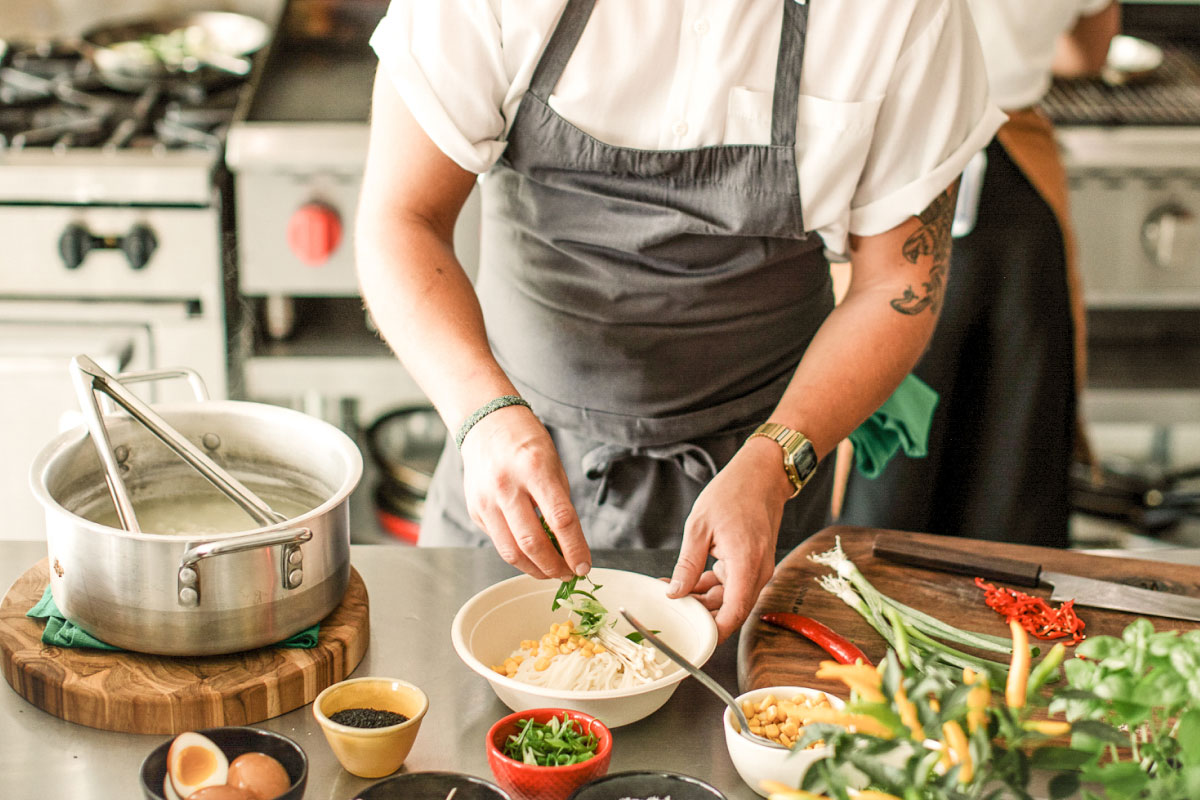

Almost a decade ago, back in the early days of the Smart Kitchen Summit (SKS) — the event I created about the future of cooking and food — Ashley Colpaart was nice enough to travel out to Seattle and talk about how shared kitchens, a still niche corner of the food world, fit into the broader evolution of food entrepreneurship.
At the time, she was building her company, The Food Corridor, which built software to run shared kitchens, and was also starting her own SKS (Shared Kitchen Summit). I’d always appreciated Ashley’s thoughtful takes on the evolution of shared kitchens, as well as another nascent area I was following at the time: the embryonic market for home cooks to sell their food online.
Back then, the pioneer blazing the trail to create an online marketplace was Josephine. Josephine launched in 2014 as a kind of Airbnb for home-cooked meals, connecting neighborhood cooks with nearby diners. I ordered a peach cobbler made in someone’s home kitchen on Josephine in Washington state, an experience where I met the cook and picked it up at her home.
Josephine ultimately shut down after running into regulatory barriers. Rather than walk away, its founders and supporters shifted into policy advocacy, forming the C.O.O.K. Alliance. Their efforts helped give rise to California’s Microenterprise Home Kitchen Operations (MEHKO) law, which allows permitted home cooks to sell a limited number of meals directly to consumers.
But California didn’t just legalize home kitchens. It also created a new regulatory layer: Internet Food Service Intermediaries (IFSIs). Platforms connecting home cooks and customers must register with the state, verify permits, and comply with specific rules, including restrictions on traditional third-party delivery.
Much of this evolution is covered in Ashley’s recent post on her blog on The Food Corridor website. After reconnecting with her at Fancy Faire in San Diego in January and reading her update, I wanted to get her take on how she sees this space today.
She believes California deliberately structured the law a certain way to avoid losing control of a market due to fast-changing conditions and consumer adoption, as happened in the food delivery marketplaces.
“I think they were trying to prevent an Uberfication moment,” she told me. “Consumers caught on so fast that they couldn’t put it back in the bottle, right? The genie couldn’t go back in the bottle.”
California’s IFSI framework, she believes, reflects that lesson. To better understand how California’s system was unfolding, Ashley filed a public records request.
“There were 58 on the list,” she said, referring to registered Internet Food Service Intermediaries. “More than half have already gone out of business.”
For her, the core question isn’t whether home cooks should be allowed to sell food. It’s whether this is the right way to support food entrepreneurs.
“Shared kitchens are already an access point,” she said. “You don’t have to go out and spend $300,000 to build your own commercial kitchen. They can access it like a gym membership when they need it and grow a business through the access that they need through a membership.”
Her concern isn’t about neighbors sharing meals informally, say, at a potluck or picnic. It’s about what happens when that activity becomes commercial.
“No one’s saying that you can’t eat food from your neighbor,” she said. “When you commercialize it, then you’re kind of entering into a different relationship. Then there does need to be some sort of consumer protections for the consumer.”
Part of what makes her cautious is the issue of trust. She said when customers order food through online platforms like UberEats, there is a trust that they are ordering food from a professional using a licensed commercial space that is regulated. She believes commercial kitchens exist to create consistency and reduce risk.
“Part of the purpose of a commercial kitchen is to reduce the amount of variables,” she said. “If you open it up to a home, who’s in the home? Who’s coming by during production? What animals are in the home? What children are in the home? There are just so many more variables.”
She also worries about enforcement realities, and doesn’t believe that health inspectors want to enter private homes. At the same time, she acknowledges the appeal of lowering barriers. When I asked her if there is a balance that could be struck between the required safety and trust needed and the potential economic opportunities home food marketplaces could provide, she acknowledged there might be.
“There probably is,” she said when I asked whether there might be a balance. “Maybe I’m not creative enough to see it.”
What is so interesting for me about Ashley’s perspective is her fascination with shared kitchens and food systems was shaped in early life by her mom, who was a food entrepreneur who built a hot sauce brand out of their home kitchen in Austin, while her interest in technology platforms was shaped in part by her dad, who worked for a Silicon Valley tech startup.
Her mom’s product gained traction and won competitions, but because they didn’t have access to nearby commercial kitchen space, scaling the business required an all-or-nothing leap her family couldn’t take.
That experience is what drove her into food systems in the first place, where she ultimately wanted to help food entrepreneurs find support structures to help them build businesses that could both scale and last.
You can hear our full conversation below or listen to it on The Spoon Podcast. You can also read Ashley’s piece on the state of home cooking marketplaces on her blog.
Related
The post Are Home Kitchen Marketplaces the Future or a Risk to Consumers? first appeared on TechToday.


Related Articles

Cellebrite cut off Serbia citing abuse of its phone unlocking tools. Why not others?
Cellebrite, which makes phone unlocking and hacking tools, stopped sales to countries...


A massive new EV study just dispelled the biggest myth about electric car batteries
A new report is the largest-ever analysis of EV battery condition in...
Second and last chance for innovators to win scaling perks: Belden extends nomination window
Last day to nominate for the 2026 Joseph C. Belden Innovation Award...
Google says its AI systems helped deter Play Store malware in 2025
Google said it prevented 1.75 million bad apps from going live on...
Leave a comment