


The US Must Clarify Its Strategy in Iran

Joint US and Israeli military strikes in Iran Saturday morning marked the start of a conflict with no clear offramp or end in sight. At the onset of the attack, Trump released a video on Truth Social declaring the strikes were to prevent Iran from building a nuclear weapon. He then called on Iranian citizens to “take over” the government, indicating he is instead seeking regime change. Statements from President Trump and Secretary of State, Marco Rubio, over the last few days have mentioned concerns with Iran’s ballistic missile program with President Trump claiming Iran was rapidly developing missiles that could hit the US, although this claim has not been verified. With varying statements clouding the reasoning behind US intervention and broader US ambitions in Iran, for the US to obtain any semblance of success it must clarify its strategic goals, communicate those goals to the American and Iranian people, and commit to seeing them through. The US has pulled the trigger on war and there will be no easy path to deescalation.
In recent days, US rhetoric on preemptive action against Iran has included everything from Iran’s ballistic missile program and nuclear program to regime change. Now is not the time for strategic ambiguity. These murky statements will make it nearly impossible for the US to achieve its goals in Iran. Previously, when the US has made such expansive claims, most glaringly with Iraq in 2003, it has not turned out well. If the US truly wants regime change, as is becoming clearer with each hour, the President needs to make this case to the American and Iranian people with a defined strategy and exit plan in place. The US cannot afford to pull back or fail in its promises to the Iranian people. Doing so will undermine US credibility.
The first flurry of news about the strikes indicate that the US and Israel are conducting a leadership decapitation strategy, led by Israel, as well as targeting military sites to mitigate Iran’s ability to retaliate. This strategy is fraught with challenges. In the weeks leading up to the strikes, reports indicated that Khamenei had secretly made succession plans for himself and top officials were they to be killed in an attack. Within the first 24 hours of attacking, Israel suggested targeted strikes killed Khamenei and declared the deaths of several other Iranian officials, including Ali Shamkani, a former secretary of the Iranian Supreme National Security Council. Infighting among the military and political elites is inevitable following these deaths, even with a succession plan in place. Further, the impact of these deaths will be far reaching, but it’s prudent to note that the decapitation strategy must extend to include mid-level officials as well, given plans of succession in place. Additionally, this strategy needs to be paired with direct support to the Iranian people to truly be successful.
In Trump’s initial social media post, he cautioned Iranians to take shelter and, once bombing concludes, urged Iranians to take over the government. Following news of Khamenei’s likely death, he posted that the bombing campaign would continue until peace in the middle east has been achieved. Over the coming days, the US’s message to the Iranian people will need to change. Messaging should be specific and show direct support for protest movements. Simply stating, “take over your government” and that the US will continue bombing until peace is achieved is not enough. The threat of a coup d’état or political infighting is at a boiling point with the death of top Iranian officials. The US needs to connect with Iranian citizens while maintaining its decapitation strategy to prevent a military takeover.
Opposition groups are currently fractured between a number of different factions, from supporters of Reza Pahlavi to political and minority groups scattered across the country. US messaging should focus on encouraging unity among groups where possible. The different factions won’t agree on everything, but they don’t have to. Encouraging groups to unite under the shared vision of regime change and the identification of a leader, or group of leaders, who can help direct the next phase of the protest movement in Iran could go a long way. The death of Khamenei presents the US with a platform to speak directly to Iranian opposition groups. The US must be careful not to be overly prescriptive with backing a leader but should adjust its messaging to affirm and support the protest movements in Iran.
Once the US has identified key opposition leaders, the US should partner with them, providing careful coordination to ensure their success. Most of this will likely not be in the public eye, coordinated secretly through US intelligence services. But any covert activity should be balanced with public statements in support of the Iranian people.
The US does not have to go at it alone. While the strikes were initially conducted exclusively with Israel, the US should make another appeal to countries in the region for support to ensure long-lasting change. Allies—particularly those who were attacked in Iran’s initial wave of retaliation—may be willing to assist the US with providing support to the Iranian people. This may look like intelligence sharing with the US so it can more accurately direct its military strikes and more precisely focus its covert and public messaging. Several countries have already condemned Iran’s retaliatory strikes, without condemning the initial US and Israeli strikes, so bringing these countries into the fight is not out of the question.
Regime change will be a long process, and the risk of a military takeover is extremely high. Now that the US has coordinated with Israel to strike Iran and remove key leaders, the US must see its intervention through. The Iranian people have suffered enough. The US has promised to end their suffering and help bring about a regime change. The US must keep its promise and not betray the Iranian people.
The post The US Must Clarify Its Strategy in Iran appeared first on Small Wars Journal by Arizona State University.

Related Articles

Painting looted by Nazis discovered in home of Dutch SS commander’s family
The renowned painting belonged to the Nazi-looted Goudstikker collection and is believed...
Data reveals 42% drop in Canadian visits to U.S. last year
University of Toronto researchers say cellphone data shows a major drop not...
Iran says it’s ready to “teach a lesson” if U.S. launches new attacks
Iran warns any new U.S. attacks will bring a “bad result,” as...
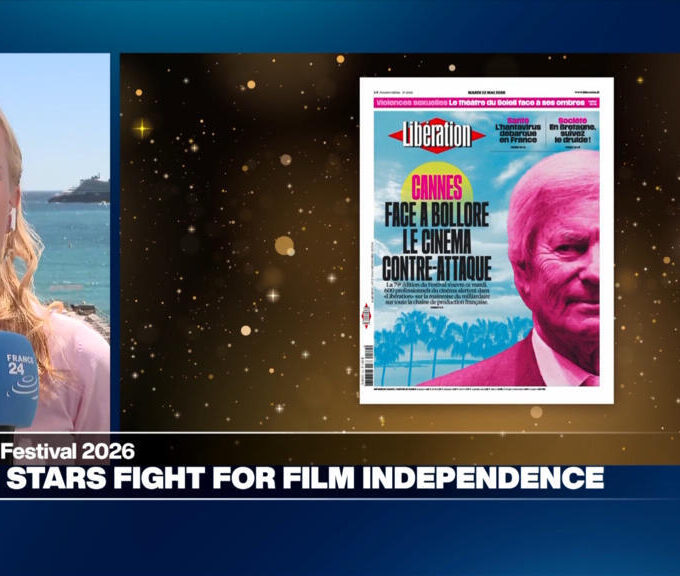

French media tycoon Vincent Bolloré casts shadow over Cannes opening
As the 79th Cannes Film Festival opens on the Croisette, politics is...
Leave a comment