




SOF-ening the ICE: The Domestication of Special Warfare

Editor’s Note:
Small Wars Journal generally does not allow authors to publish anonymously or under a pseudonym. If an author is an authentic voice and can demonstrate to the editors that they have reason to fear retribution for publishing their opinions, then we have a process for granting rare exceptions. This article and the author have met that standard. We encourage a robust discourse on this issue and all issues of national and international security.
Abstract
Federal immigration agents have increasingly adopted Special Operations Forces (SOF) aesthetics and tactics, despite minimal operational justification. This article argues that this mimicry is a symptom of an ailing organization and that it dangerously accelerates police militarization in the United States. The militarization represents a cultural appropriation of the “warrior” persona, rather than “law enforcement”. The ultimate peril is that the boundary between police and the military is blurring, resulting in a violation in the spirit of Posse Comitatus. The consequences of this phenomenon are the increase of violence, as the nation tragically witnessed through the shootings in Minnesota; an erosion of civil-military relations and public trust; and the risk of an executive paramilitary unit. Our nation’s leaders must act now to restrict the Department of Homeland Security before the damage to national security or defense is too great.
Introduction: The Domestication of Special Warfare
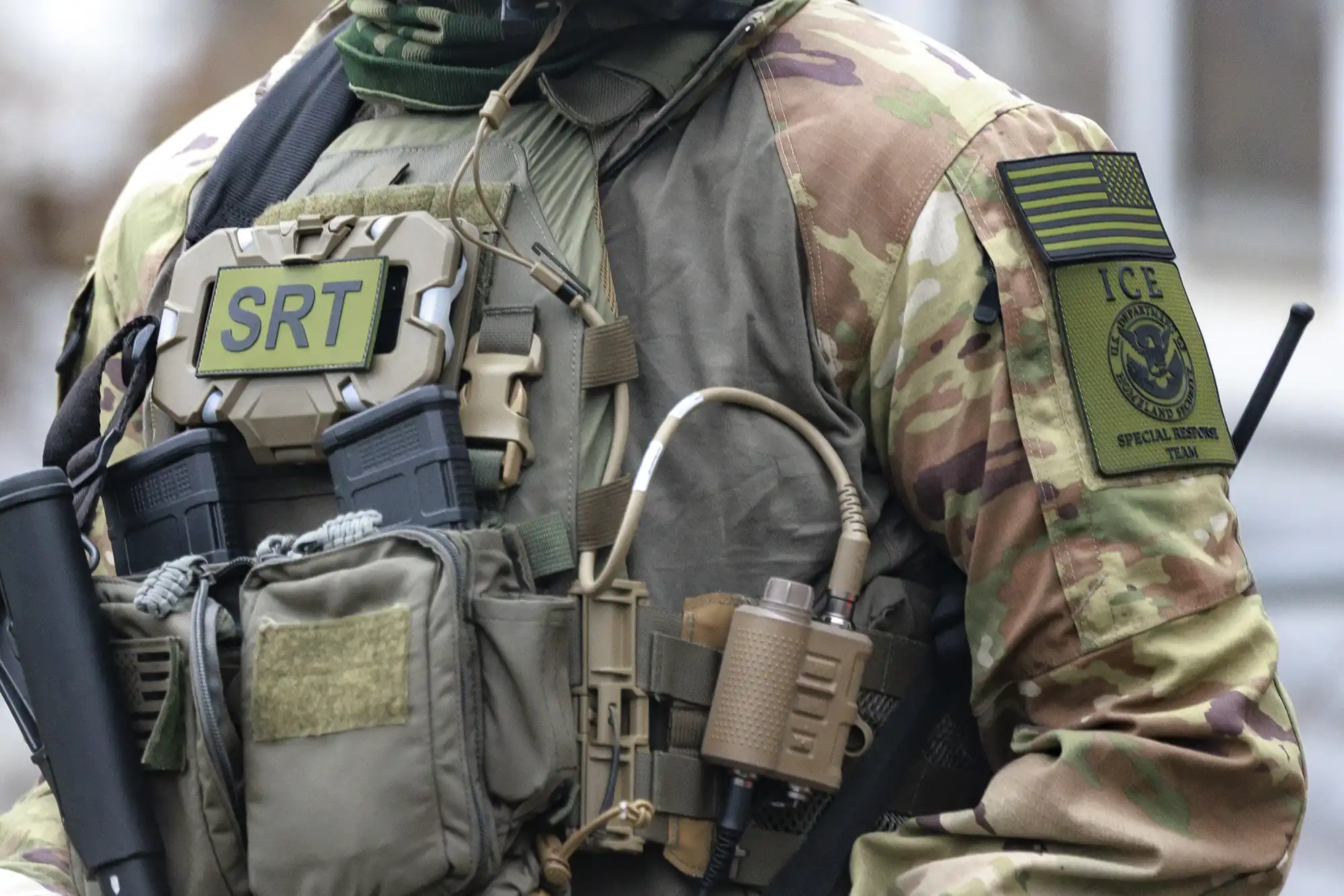
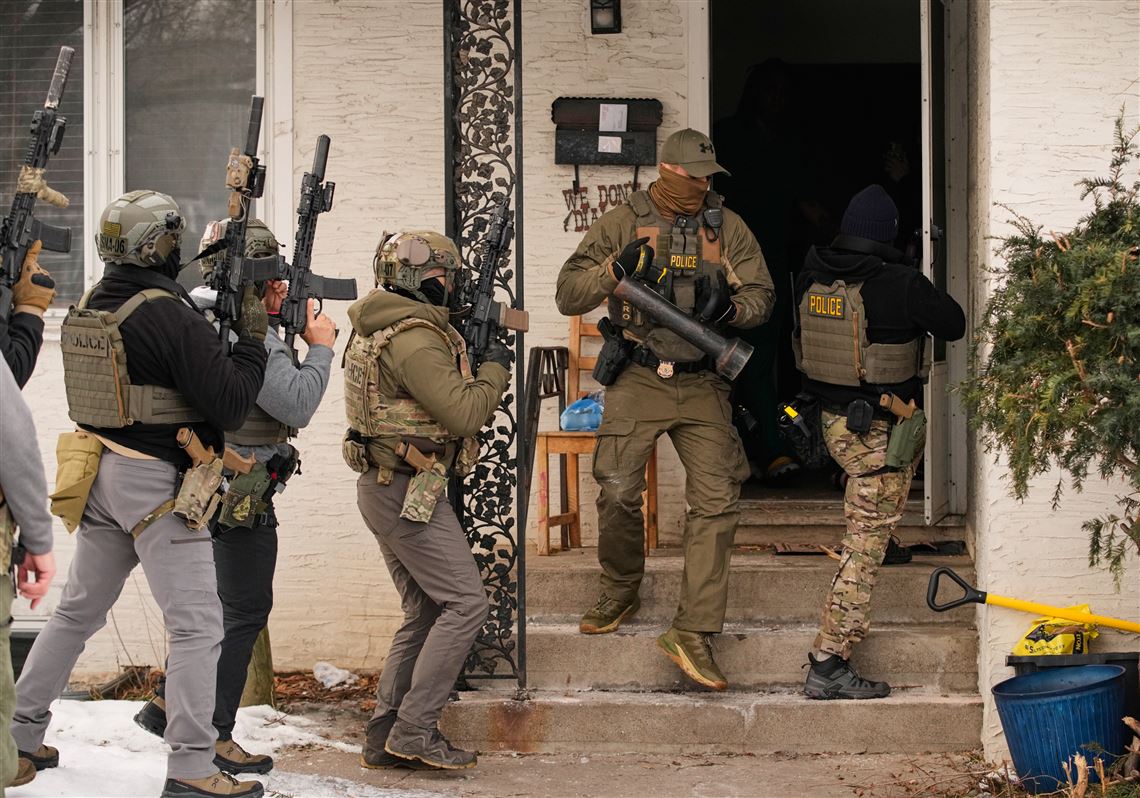
Since early 2025, images of masked, heavily armed, and camouflaged Immigration and Customs Enforcement agents apprehending people across the United States have flooded social media and news outlets. This phenomenon has triggered a fierce political divide, which reached a tragic tipping point in January 2026, as just weeks apart from each other, federal immigration agents fatally shot two U.S. citizens, Renee Good and Alex Pretti.
As a Special Forces service member, I argue that the situation in Minnesota is an inevitable byproduct of federal agents adopting Special Operations Forces (SOF) aesthetics and tactics, not out of mission necessity, but rather organizational mimicry. By co-opting the image and techniques of SOF, the agency is attempting to project a deterrent signal domestically, citing it is for the sake of officer safety. Despite that, the tactic accelerates violence and police militarization in the United States because the federal agency is beginning to culturally identify itself as the military, a policy instrument. Ultimately, the Department of Homeland Security (DHS) is bypassing the spirit of the Posse Comitatus Act and creating a paramilitary force accountable only to executive policy rather than the rule of law. Paradoxically, this phenomenon decreases national security and defense.
Counterfeiting Competence
Camouflage and superior tactical equipment are functional requirements to maximize lethality and success during high-risk special operations missions, such as counterterrorism. During a raid, for instance, suppressors reduce visual and audible signatures and enable communication in a firefight. Plate carriers allow Special Operations Forces to carry enough equipment and ammunition for sustained combat operations where logistics support is strained, such as those found in Ukraine, rather than Minnesota. The reason is simple, when our service members go out the door, they face certain conflict.
In comparison, the immigration agency does conduct some high-risk operations that warrant the use of camouflage or tactical equipment, such as Operation Matador in 2017, which led to the arrest of various MS-13 gang members. However, unlike special operations, the ubiquity of tactical gear is disproportionate to the risk level that ICE activities typically entail. Statistics show that between April and June 2025, a mere six percent of arrests involved criminals with violent offenses. The data remained consistent throughout the year; of note, between October and November 2025, violent offenders accounted for only five percent of arrests. This evidence suggests that the exhibition of military paraphernalia is not an operational requirement. Suppressors provide no utility while arresting unarmed personnel in a three-bedroom house.
The distinction of SOF extends beyond the functionality of equipment. The Green Beret, for example, is a visual representation of the rigorous selection and difficult training each Green Beret has undergone. It is a receipt, paid for over two years through endless miles of rucking, countless hours of battle drill rehearsals, and weeks of survival training. The training was a relentless cycle of refinement—day after day and week after week—until we reached the proficiency necessary to conduct high-risk missions on behalf of the nation. This notion is codified as a Special Operations Force Truth: “Special Operations Forces cannot be mass produced”. Qualified, trustworthy, and capable personnel must be refined in the forges of realistic training.
In sharp contrast, Immigration and Customs Enforcement (ICE) exhibits neither specialized selection nor significant training investment. For instance, in an effort to keep up with operational demands the agency has relaxed its barriers to entry, completely removing the age restriction. Even more concerning, the agency has adjusted its training program from its traditional 13-week training window to 47 days. This emphasis on quantity over quality has resulted in the induction of over 12,000 officers in just four months. Such a “high-throughput” model is antithetical to the SOF Truth, suggests dilution of standards, and results in a substandard force that is inadequately prepared for hazardous duties.
For SOF, the gear and equipment are a byproduct of the mission and the training. For the immigration agency, it’s a costume. They are faking the signal of differentiation and operational mastery through distinct uniforms and equipment without paying the associated costs in training and preparation. This reliance on aesthetics amounts to visual “cheap talk,” which is a sign of an organization in crisis, grasping for legitimacy.
Organizational Mimicry
Why would a federal law enforcement agency mimic a special operations organization? Sociologists suggest the answer lies in a phenomenon called mimetic isomorphism, or organizational mimicry. According to this theory, when an institution questions its own authority or can’t identify a clear path to success, it will mimic organizations that it views as “legitimate”. In this case, the immigration agency is borrowing the image of SOF, because it signals competence and credibility. As strategist Colin S. Gray notes, “special operations forces embody and express the qualitative excellence of the individual soldier that ensures across-the-board respect from any opponent.” The literal image of special forces communicates unrivaled competence and is intended to instill fear in potential foreign adversaries. ICE is attempting to hijack this precise message, “fear me”, and weaponize it against the domestic audience. The agency’s emulation of elite units is a cry for legitimacy.
ICE’s insecurity likely stems from a troubled workforce in flux. By lowering entry standards to meet aggressive force-generation targets—and failing to require prior law enforcement experience—the agency is flooding the field with an under-experienced and ill-trained cohort. Lacking the foundational maturity of traditional policing, these officers use the aesthetics of special operations as a compensatory mechanism. Moreover, there are reports that career immigration officers are in the throes of morale problems. These agents feel that they are no longer protecting the nation from dangerous criminals, are confronted by fellow citizens about their actions, and are stigmatized. The data concurs, as a majority of Americans don’t approve of the agency’s tactics. In which case, these agents mirror special forces to provide sanctuary and suppress criticism.
But what’s the harm? As my mother would say, “imitation is the sincerest form of flattery”. The problem is that law enforcement mimicking special operations effectively domesticates special warfare, which is extremely concerning, considering ongoing undercurrents of police militarization in America.
The Rise of Militarism: A Culture Change
Police militarization is not a novel premise, but it also goes beyond equipping police forces with assault rifles. The concept is more easily understood by viewing militarization across four distinct spectrums: material, organizational, operational, and cultural. For decades, police militarization has been visible through material, organizational, and operational indicators, such as the transfer of defense material through the 1033 program, and the creation and employment of Special Weapons and Tactics (SWAT) teams. But recent events, such as Operation Metro Surge, have exacerbated this trend.
While the physical representation of SOF represents a militarization in the material spectrum, it has expanded beyond that. There are also indicators that the DHS agents have undergone operational militarization as well, as noted in unique military tactic employments. For example, some news outlets report that the agency is using biometrics, location-based data, and even AI targeting software, domestically. If true, this development shares similarities with the AI & software tactics that an elite Israeli intelligence unit is employing for targeting in its current operations. Moreover, the Department of Homeland Security recently conducted a nighttime raid, complete with fast rope rappel on a building roof from a helicopter, in Illinois. This quintessential special operations insertion technique is usually used by units to quickly insert into a combat area too small for a helicopter to land, not an American suburb.
Through this incremental militarization of both material and operations, the real danger is that it ultimately accelerates within the cultural spectrum. For instance, by donning the visual distinction of SOF and employing their techniques, agents are now deliberately forgoing their traditional identity as “law enforcers” and adopting the “warrior” persona. In fact, the immigration agency’s recruitment ads are deliberately targeting individuals through the “warrior” ideology. This phenomenon represents a true adoption of militarism—a mindset that holds violence as the most effective method to resolve problems.
Now some law enforcement officials justify this posture and argue that militarization is an aid to officer safety through capability or deterrence. For example, officers are better able to respond to active shooters, and criminals will think twice before acting. However, the evidence proves otherwise:
First, data indicates there is no correlation between militarization and officer safety or crime deterrence. In fact, despite militarization efforts, the immigration agency recently claimed a 1000% rise in assaults on officers, indicating the opposite intended effect.
Second, the posture mimics an “escalate to de-escalate” tactic, which is criticized for increasing the risk of violence through mistrust. This exact phenomenon, perhaps exacerbated with reduced training standards, contributed to the fatal shootings of Renee Good and Alex Pretti. The situation escalated immediately to “lethal force” (when viewed through the lens of the force continuum) because the officers identified Renee and Alex as legitimate threats rather than citizens worthy of de-escalation techniques.
Third, research suggests a negative correlation between police militarization techniques and public support. This notion is corroborated by the sharp increase in demonstrations across the United States. Last year saw a 77% increase in demonstrations from 2024, and opposition to the immigration agency is cited as a main contributor.
The evidence is clear: by dressing for combat, agents are turning routine arrests into hostile confrontations. Mimicry is actively contributing to civil unrest and at times, violence.
Ultimately, the agency is beginning to self-identify as a military organization. As scholars warn, the peril of police militarization is the erosion of the boundaries between civil law enforcement and the armed forces, to the point where the military mindset of “close with and destroy the enemy” becomes misapplied to the American people, as we have tragically already seen in Minnesota.
The Cost of Domestic Special Warfare
While the immigration agency continues to adopt the image of elite military units, the rest of the nation pays the bill. The costs of this organizational mimicry extend far beyond the immediate risks of tactical escalation and have longer-lasting implications.
First, it undermines credibility and security. The use of face coverings and lack of identification sets a worrisome precedent because it removes the accountability of agents during arrests. This practice undermines the legitimacy of the American government, and even a former ICE Director believes that face masks are ruining the credibility of the organization. More seriously, the lack of identification also creates significant security vulnerabilities that criminals can exploit, by posing as officers. In fact, the Federal Bureau of Investigation (FBI) recently requested ICE agents to begin identifying themselves during arrests, citing five criminal incidents in which perpetrators posed as federal agents to commit violent acts. When legitimate officers are not distinguishable, they inadvertently put the public at risk.
Second, it degrades civil-military relations. When law enforcement appears as the military, the average American cannot easily discern the difference. Citizens will see the visual signature of camouflage and associate unpopular actions as part of the military. This confusion could tarnish the military’s reputation as an apolitical entity. Moreover, research indicates a correlation between public trust in police and public trust in the military. This correlation is particularly significant given that, according to a recent poll, 60% of Americans view the immigration agency unfavorably. An erosion of public support to the military could translate into practical issues, such as lower military recruitment and retention rates; in turn, this could ultimately compromise the defense readiness of the nation.
Third, it creates civil unrest. In addition to the data stated above, counterinsurgency experiences in special operations have taught us that overt military presence can signal ‘occupation’ and that “the more force that is used, the less effective it can be”. This visual language results in unintended consequences; rather than encourage compliance, it alienates the populace and increases “anti-government” activities. If federal agents appear as military occupiers, they will be viewed as foreign, untrustworthy, and authoritarian; subsequently, this will reduce community cooperation, decrease policing efforts, and disrupt national stability. Moreover, American adversaries could exploit this dissent in psychological operations and further weaken civil trust in the nation.
Fourth, and potentially most disastrous, it violates the spirit of Posse Comitatus, the Act that provides a vital barrier that prevents the use of the U.S. military against its own citizens. This prohibition is important in a Clausewitzian sense because the military exists as a vector by which the state applies its monopoly on violence, e.g. war, to achieve political goals. Simply put, the Act protects the citizenry from being controlled through violence. When federal agents adopt special forces equipment and techniques, they begin to see themselves as the military and effectively bypass this Act. In turn, this repurposes the police from a civil entity that upholds the law into a political arm that enforces policy. By violating this Act, members of the Department of Homeland Security become a paramilitary for any sitting administration.
Conclusion
The adoption of special operations forces equipment and tactics by federal immigration agents is not an operational necessity—the evidence highlights that agents are adopting elite aesthetics to intimidate the citizenry, not to enhance mission effectiveness. In doing so, they instigate violence rather than prevent it, provoke resistance, and corrode the legitimacy that they seek.
We must reverse this course before it is too late. By militarizing federal agents and not providing oversight, we have created the catastrophic precedent that any elected leader can employ federal agents as a private military force domestically. It’s antithetical to the American identity, and it doesn’t stop there.
Legal scholar Ozan Varol warns in Stealth Authoritarianism that regimes conceal repressive measures under a legal mask to impose them without detection. Is Title 8 enforcement just the flavor of the week? Or is it more than that? As Varol states, “In the modern era, authoritarian wolves rarely appear as wolves. They are now clad, at least in part, in sheep’s clothing.”
But the agents aren’t just wearing sheep’s clothing; they are wearing ours. The SOF aesthetic provides cultural legitimacy from years of the Global War on Terror to weaponize against its citizenry. This is the domestication of counterinsurgency, a national version of “The Surge”. If the nation continues to view its citizenry through a rifle optic, the social contract will dissolve. The public becomes the enemy.
Twenty years of the Global War on Terror taught us that heavy-handed military presence alienates the population and fuels resistance. The difference this time is that it affects national security and national defense. When citizens cannot distinguish between the police and the military, both institutions lose legitimacy. Recruitment suffers. Readiness declines. Adversaries sow unrest and they gain an advantage.
To mitigate this, United States Senate Committee on Homeland Security and Governmental Affairs must exercise its power to provide oversight on immigration agents. The fatal shooting of Renee Good and Alex Pretti should be enough to begin civil inquiries into the state of the agency and its operations. Next, the Senate and House Appropriations Subcommittees on Homeland Security must enforce fiscal discipline on the Department of Homeland Security, requiring that tactical equipment procurement be restricted to units with validated tactical requirements. Moreover, the Department of Homeland Security agents should adhere to and enforce the Federal Bureau of Investigation’s warning regarding the need for clear identification during arrests and regulate their agents’ uniforms. Finally, and potentially most importantly, the Department of Defense should commission its own targeted study to determine whether the extreme federal agent tactics are negatively affecting public trust in the armed forces and, subsequently, recruitment levels. If the data confirms a negative correlation, then the national strategy could be at risk. In such a case, the Department of Defense must confront Congress with the hard truth: Police militarization is a threat to national security and defense.
The post SOF-ening the ICE: The Domestication of Special Warfare appeared first on Small Wars Journal by Arizona State University.




Related Articles
U.S. clears some diplomatic staff to leave Israel amid tension with Iran
As Trump leaves the threat of war on the table amid nuclear...
Behind the myths of the British Empire: Nigel Biggar and Mehdi Hasan
Mehdi Hasan goes head-to-head with Nigel Biggar on the brutal legacy of...
U.S. offers $10 million for capture of cartel bosses “The Frog” and “Achilles”
The U. S. is offering $5 million each for information on Rene...
F1 driver Doohan says armed men confronted him in Miami after death threats
Australia’s Jack Doohan says received death threats before being dropped by F1...
Leave a comment