





Глаза видят, руки делают “The Eyes See, the Hands Do”: Africa Corps Does Neither
Abstract
Russia’s Africa Corps failure in Mali demonstrates the limits of counterterrorism strategies that prioritize technical intelligence over human insight. JNIM’s fuel blockade of Bamako illustrates how TECHINT-rich but HUMINT-poor intelligence misreads insurgent intent, leading to reactive violence and misalignment with strategic aims. This article argues that early, AI-enabled fusion of HUMINT and TECHINT can restore analytic judgment, improve assumption testing, and enable more effective counterinsurgency in HUMINT-scarce environments.
Introduction
The withdrawal of Niger, Burkina Faso, and Mali from regional security architectures such as the G-5 Sahel and the Multinational Joint Task Force (MNJTF) has accelerated the collapse of coordinated counterterrorism operations in Mali. Jama’a Nusrat ul-Islam wa al-Muslimin (JNIM)’s fuel blockade of Mali’s capital Bamako confirms this, and disastrously so. However, International and Western-led security architectures also performed poorly in deterring insurgency in Mali. Chronic shortcomings were pervasive due to weak Human Intelligence (HUMINT) networks, dangerous gaps between strategic assessments and tactical realities, and an overreliance on Technical Intelligence Gathering methods (TECHINT). Aerial ISR, geostrategic intelligence, and Signals Intelligence substituted for careful intelligence collection. While Western partners were more effective than Wagner – now Africa Corps – they nevertheless failed to conduct effective counterinsurgency. Africa Corps has learned little and has failed to emulate the limited intelligence integration and HUMINT collection that the G-5 Sahel and MNJTF accomplished.
The inability of Malian junta forces and their Africa Corps partners to anticipate, disrupt, or respond to JNIM’s maneuver illustrates a basic truth repeatedly demonstrated in counterterrorism: TECHINT can augment HUMINT; however, it cannot replace the local networks and insight required for contextualizing insurgent intent and movement. As militaries and intelligence agencies are likely to continue being called upon to operate in compressed intelligence environments, their intelligence methodology must adapt. Adaptation will depend on the early integration of AI-supported HUMINT and TECHINT fusion, moving beyond traditional sequential intelligence methodology.
Mali’s Security Landscape and Russia’s Africa Corps
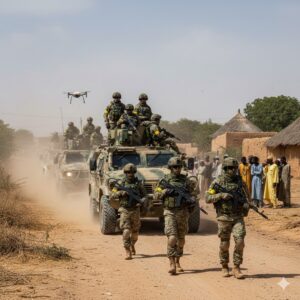
Mali and Russia’s counterinsurgency posture is defined less by the formal creation of the Alliance of Sahel States than by the substitution of multinational intelligence coordination with a bilateral security partnership centered on Russia’s Africa Corps. Africa Corps’ creation after the Prigozhin coup placed the group under the control of the GRU and the Ministry of Defense in 2023. Whereas Wagner semi-independently pursued opportunities to create sources of funding for its expansion, the Africa Corps is more closely aligned with Russian objectives in establishing influence in the Sahel, rather than a pure profit motive. Africa Corps now leads strike coordination, force protection, and training for the Malian junta, and its efforts in regime protection and counterterrorism are a role that it is unprepared for. Therefore, its counterterrorism methods have directly undermined the conditions necessary for effective human intelligence collection and counterinsurgency. Africa Corps’ coercion-focused approach to human intelligence gathering prioritizes the extraction of intelligence through violence and intimidation rather than cultivating access and trust. While Africa Corps maintains TECHINT capabilities that enable strikes and raids, Russian and Malian intelligence services have been consistently surprised by insurgent preparations.
JNIM’s across Mali demonstrate the extent of this failure. The blockade required sustained insurgent preparation, coordinated movement of forces, and operational security to avoid defeat. Logistical preparation was not confined to traditional insurgent strongholds; rather, JNIM’s operations have expanded into Southern Mali, where it previously had a minimal presence. Also in July 2025, Maçina Liberation Front (FLM) launched seven simultaneous attacks spanning hundreds of kilometers in western Mali, targeting border towns near Senegal and Mauritania. Neither of these large-scale efforts could have been concealed from technical sensors alone. The sustained movement of fuel, fighters, and materiel required for the Bamako blockade has been documented through open-source tracking and satellite imagery, and should have generated detectable signatures. Yet JNIM not only avoided interdiction but also adapted its movements to exploit Africa Corps’ reliance on aerial ISR. Insurgents were able to utilize multipronged movements and avoid signal snooping.
In the absence of trusted local sources capable of identifying intent, logistics nodes, and command relationships, Africa Corps’ TECHINT advantage devolved into reactive violence.
Case Study: Mali
Investigations of Africa Corps operations have documented that their forces became reactive and violent when confronted with insufficient intelligence from local sources, hindering their ability to target insurgents precisely. Offensives in regions such as Tombouctou and Ber saw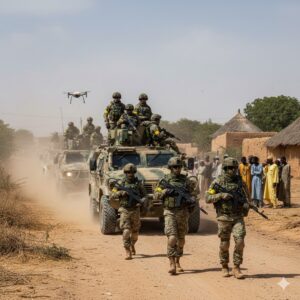 extrajudicial killings and arrests of civilians following the capture of towns, with limited evidence of targeted human intelligence gathering guiding these actions. Civilian fear of retaliation has discouraged cooperation with security forces and degraded the pool of human informants available. Between January 1 and October 31, 2024, the Malian military and allied Wagner forces carried out 255 operations resulting in the deaths of approximately 1,063 civilians, compared with 912 civilians killed in 216 operations during the same period in 2023. ACLED data indicates that Islamist armed groups carried out fewer attacks in 2024 than in 2023 (279 vs. 326), yet civilian deaths attributed to insurgents remained lower than those caused by government and Africa Corps operations (344 vs. 478). Air and drone strikes also increased, with 129 reported in the first ten months of 2024 compared with 84 in the same period of 2023. Civilians fleeing northern Mali reported widespread abuses, including extrajudicial killings, torture, and the razing of communities.
Despite claims of tactical successes, insurgent attacks have not been slowed by the deployment of Russia‑aligned forces. This indicates that observable activity detected through technical means has not deterred insurgents, despite more strikes and raids. Africa Corps’ struggles in Mali illustrate a compounding breakdown of the Intelligence Cycle. Inaccurate HUMINT at the Planning & Direction stage inevitably degrades the Collection phase, resulting in a reliance on TECHINT that lacks the human context necessary for effective operations. As a result, assumption testing, the systematic validation of analysts’ underlying beliefs about adversary intent, capability, and behavior against available evidence, is improperly conducted during the analysis phase, leading to operations misaligned with strategic objectives.
The Intelligence Cycle and the Value of HUMINT
TECHINT can detect movement, estimate force size, or even capture communications that hint at intent, making it highly effective at producing raw data. However, the “secrets in the mind”: the intentions, motivations, and localized context of actors operating on the ground cannot be reliably discerned by sensors alone. TECHINT can identify what is happening, but understanding why it is happening requires human insight. Without integrating HUMINT, or integrating poorly gathered HUMINT into the intelligence cycle, analysts risk allowing technical indicators to dominate assessments.
Consider the traditional five-step Intelligence Cycle:
- Planning & Direction
- Collection
- Processing & Exploitation
- Analysis & Production
- Dissemination
The Intelligence Cycle is designed to enable informed decision-making across strategic, operational, and tactical levels. Integrating HUMINT and TECHINT within the cycle reduces uncertainty and improves analytic judgment. At the planning and direction stage, intelligence services identify HUMINT as essential for assessing intent, anticipating adversary decisions, and reducing strategic surprise. While TECHINT is capable of detecting activity, it is limited in its capabilities. Adversaries like JNIM are highly skilled in low-tech operational security and can exploit TECHINT gaps through signature management and tactical deception, feeding false indicators into the collection process. Examples of signature management aimed at deceiving TECHINT from JNIM were not forthcoming, but it is not a new practice, with well-known examples spanning from the Second World War to the Russia-Ukraine War. Historically, combatants used fake radio traffic and inflatable vehicles to fake the presence of a large force. To confuse the machine vision systems in munitions, units today utilize highly novel means to obfuscate their visual signatures. A notable example is the Russian military’s use of rubber tires on aircraft wings, a low-tech countermeasure designed to ‘break’ the digital silhouettes identified by ISR platforms.
In such situations, HUMINT is indispensable. While collection may formally involve both HUMINT and TECHINT, if human reporting becomes sparse or unreliable, analysts are unable to validate or challenge assumptions at the analysis stage, leading to errors at the operational and tactical levels in counterterrorism operations. Structured analytic techniques (SATs), such as analysis of competing hypotheses or key assumptions checks, depend on human insight to validate or challenge TECHINT-derived conclusions. In central Mali’s Mopti region, local community leaders and villagers negotiated localized non‑aggression pacts with JNIM and other insurgent groups. With the absence of HUMINT confirming that these meetings were negotiations, satellite or aerial imagery may indicate little other than the presence of insurgents, and lead to strikes that degrade future collection.
TECHINT-rich but HUMINT-poor intelligence often drives strikes and operations that misread insurgent intent, generating civilian harm and reinforcing insurgent narratives. This has been repeatedly demonstrated in the Global War on Terror, and continues in Mali. As highly adaptive learning organizations, JNIM and similar groups frequently decentralize their structures to evade strikes, opting instead to operate in rural regions where government influence remains inconsistent. This results in strikes and raids being ineffective for counterinsurgency, even if they momentarily disrupt insurgent operations. In such an environment, requirements for strategic intelligence may continue to call for HUMINT, but operational practices make it unattainable, exacerbating a cycle of technical overreliance and human intelligence decay. Without systematic assumption testing and the validation of TECHINT-derived interpretations against HUMINT, the intelligence cycle risks producing outputs that are internally consistent but operationally misleading.
As former CIA Director Tim Sylvester noted in 2024, the most critical pieces of intelligence “lie in plans and intentions, the mood, the context with which someone is making a decision.”
The Future of TECHINT-Enabled HUMINT
The Africa Corps’ failure in Mali is a recurring example of how intelligence-gathering processes for enabling contemporary counterterrorism must adapt to a compressed intelligence landscape defined by rapid deployment. HUMINT scarcity and accelerated decision-making cycles are likely to continue defining counterinsurgency as policymakers demand quick action. Intelligence architectures are expected to expedite collection, processing, and analysis to generate actionable all-source intelligence. To stay ahead of adversary adaptation and coalescence, prevent degradation of the human environment, and avoid an overreliance on TECHINT, intelligence methodologies should be overhauled to allow true all-source synthesis earlier in the intelligence cycle.
While all-source analysts exist, minds native to the languages of quantitative technical disciplines and the qualitative implications of intelligence are rare. Specialized HUMINT officers remain indispensable for interpreting motivations, intentions, and local context that lie beyond 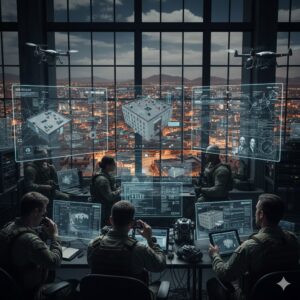 what is readily apparent in the patterns that computers excel in detecting. New technical tools and frontier AI data analytics pipelines can fuse and contextualize multiple forms of intelligence earlier in the cycle, revealing connections that might otherwise remain undetected. Often, raw TECHINT is processed and exploited before reaching all source analysts. The processing and exploitation stage, while necessary to translate RAWINT out of its native domain given human cognitive limitations, can strip away nuance or disconnect intelligence from the broader context. By contrast, AI-enabled systems can integrate HUMINT inputs alongside TECHINT without a translation step (outside of the inherent digital encoding of information), preserve context, and provide richer insights for analysis and planning.
Earlier fusion makes each piece of HUMINT go further in HUMINT-sparse environments. Subsequently, every piece of HUMINT adds incremental value to TECHINT, particularly when processed earlier in the intelligence cycle. Even sparse or fragmented human reporting can improve the fidelity of predictive models, highlight anomalous behavior, and validate or challenge TECHINT-derived conclusions. This early fusion of HUMINT and TECHINT-derived data strengthens both collection and analysis, enabling operations that are tactically precise and aligned with strategic objectives, while avoiding reactive counterterrorism operations.
However, while AI-driven analytics tools excel at pattern recognition and managing vast datasets, they will likely remain limited in contextual reasoning and the subtleties of human behavior. In contrast, human collectors possess domain-specific judgement and cultural insights that AI cannot yet replicate. By combining AI’s ability to process and exploit raw data with human judgment, an intelligence community can produce a force-multiplying effect. Practitioners must take their usual care not to act with undue haste; these tools are not infallible and should have their assumptions and conclusions tested as a human analyst would.
This paradigm is likely not speculative. Highly classified systems such as those employed by the U.S. military, national intelligence services, and allied partners already integrate HUMINT and TECHINT. AI-enabled data fusion platforms, such as those offered by companies like Palantir, possess the functional capabilities required to operationalize this vision, despite the methodology and specific capabilities remaining undisclosed. An early version of one of these systems is disclosed to have enabled a team of 20 to match the targeting performance of 2000 during an XVIII Airborne Corps trial. It is reasonable to infer that the systems’ operational capabilities have grown beyond these acknowledged benchmarks in the intervening years. Properly applied, AI-augmented HUMINT restores the human dimension of intelligence in conflicts in which intelligence communities do not have the time for deep and sustained HUMINT collection.
In such an environment, consider the reformed intelligence cycle:
- Planning & Direction: HUMINT remains central for strategic intelligence requirements, anticipating insurgent intent, and shaping collection priorities. Even in HUMINT-sparse environments, AI fusion ensures that planners can leverage limited human reporting alongside TECHINT to reduce strategic surprise.
- Collection: AI-driven guidance allows HUMINT collectors to focus scarce human resources on high-value sources, while TECHINT sensors continue to monitor patterns and movements. The fusion of human insight and technical observation ensures that collection efforts are targeted, efficient, and contextualized.
- Processing & Exploitation: Rather than risking a loss of actionable information through information overload, AI-enabled systems allow for better encoding rather than dismissal of raw TECHINT with HUMINT inputs, preserving context and revealing connections that might otherwise be overlooked in the analysis and production step.
- Analysis & Production: Structured analytic techniques (SATs), assumption testing, and scenario modeling can be effectively applied even with sparse HUMINT because less information is lost in the processing stage. Analysts are able to validate TECHINT-derived conclusions against human reports.
- Dissemination: Intelligence outputs inform operations that reinforce trust, protect human sources, and expand the human intelligence environment.
Toward Smarter Counterterrorism
Russia’s Africa Corps entered Mali promising rapid, decisive results. Instead, it has demonstrated the limits of counterterrorism reliant on TECHINT-enabled strikes. JNIM’s fuel blockade of Bamako is not a failure of detection; it is a failure of intelligence methodology and application. The lesson learned from Mali is neither novel nor uniquely Russian. Intelligence architectures that prioritize technical collection over human access are likely to produce tactical activity divorced from strategic effect. Africa Corps has simply compressed that pattern into a shorter, more violent cycle where limited HUMINT degrades contextualization of intel, degraded analysis produces reactive operations, and reactive violence further damages the human environment required for intelligence collection.
The future of counterinsurgency intelligence will not be decided by the next generation of sensors alone. It will be decided by whether intelligence communities adapt their methodology to operate effectively in HUMINT-scarce environments. Early stage, AI-enabled fusion of HUMINT and TECHINT offers a way to break the cycle that Africa Corps exemplifies, not by replacing human judgment, but by amplifying it. When sparse human reporting is integrated earlier in the intelligence cycle, it can shape collection priorities, challenge technical assumptions, and prevent the misreading of observable activity as understanding. Crucially, this is not an argument for faster targeting. It is an argument for better judgment. AI-enabled fusion amplifies the strengths of sequential intelligence cycles while better preparing them for the future fight.
The post Глаза видят, руки делают “The Eyes See, the Hands Do”: Africa Corps Does Neither appeared first on Small Wars Journal by Arizona State University.


Related Articles

What to Know About Nepal’s Gen Z Election
Nepal is holding its first election since a youth-led uprising against corruption...

Iran Live Updates: Israel Begins ‘Broad Wave of Strikes’ on Iran’s Infrastructure
The U.S. announced the names of four soldiers who were killed by...

Who Is Mojtaba Khamenei, the Son and Possible Successor of Iran’s Supreme Leader?
The selection of the son of Ayatollah Ali Khamenei, who was killed...


Why the Karachi Siege Shatters the Pakistan-Iran Bargain
Karachi – The durability of a diplomatic “buffer state” is rarely tested...
Leave a comment